.svg)





Why Warm Neutrals Win
Fri May 01 2026
- Kitchen Design
Why Warm Neutrals Are Replacing Cool White in Southern Kitchen Design
Part Two of the “Wood Is Back” Series
White kitchens aren’t going away—but in Southern homes, especially across Tennessee, cool white is giving way to warmer neutrals. Creamy whites, soft taupes, mushroom tones, pale woods, and beige-forward palettes are becoming the new foundation for kitchens that feel lived-in, welcoming, and rooted in place. In Part One of this series we explored the return of wood cabinetry, Now we go a layer deeper: the color conversation. Because choosing wood is only the beginning. The real question designers, builders, and homeowners are wrestling with right now is this — what palette surrounds it?
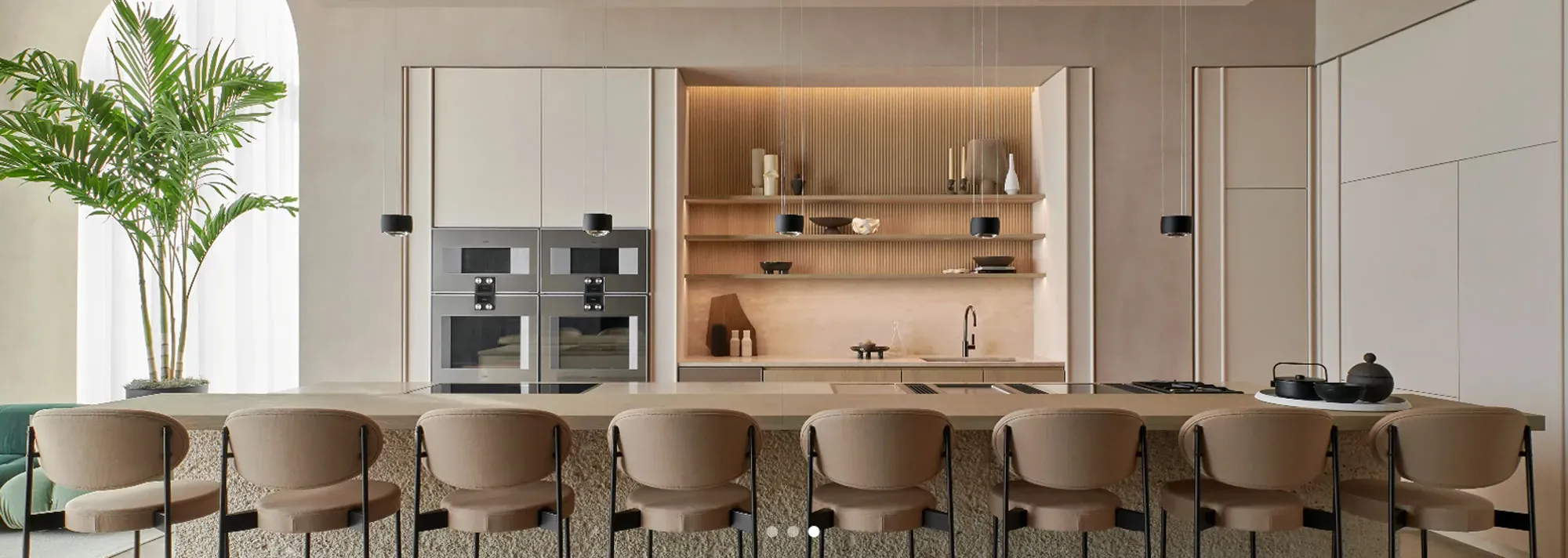
For designers, builders, and homeowners alike, this shift is about more than color. It reflects how people in the South want their homes to feel: relaxed but refined, classic but current, and deeply connected to everyday life.
1. Warm Neutrals Work With Southern Light
Color psychology isn't new, but its application to kitchen design has never been more deliberate than it is today. White kitchens, for all their visual cleanliness, carry a clinical edge. They ask you to maintain them — to notice every smudge, every coffee splash, every fingerprint on a cabinet door. They perform. Warm neutrals forgive. They settle. They ask nothing of you except to be comfortable.
Tennessee and Northern Mississippi homes benefit from abundant natural light, but that light is often warm and directional, especially in open floor plans with large windows, porches, and indoor-outdoor connections. Cool whites—once favored for their crisp, modern look can read stark or bluish under this light. Warm neutrals soften that effect. Creamy cabinetry, natural oak, and stone with beige or sand undertones reflect light without glare, creating spaces that feel brighter and more comfortable throughout the day. The result is a kitchen that feels inviting at sunrise, golden in the afternoon, and calm at night.
2. A Natural Companion to Wood and Organic Materials
As we explored in “Wood Is Back,” homeowners are returning to natural materials—wood cabinetry, stained islands, fluted oak details, and furniture-style millwork. Warm neutrals support this movement beautifully.
Rather than competing with wood, warm palettes enhance grain variation and natural texture, allowing cabinetry, flooring, and furniture to feel intentional rather than overly styled. This is especially appealing in Southern interiors, where craftsmanship, heritage, and timelessness matter.
3. Homes Are Becoming More Personal and Less Clinical
Today’s clients want homes that feel collected rather than curated. Cool white kitchens, while still beautiful, can sometimes feel overly pristine or impersonal, especially in family-focused Southern homes where kitchens double as gathering spaces.
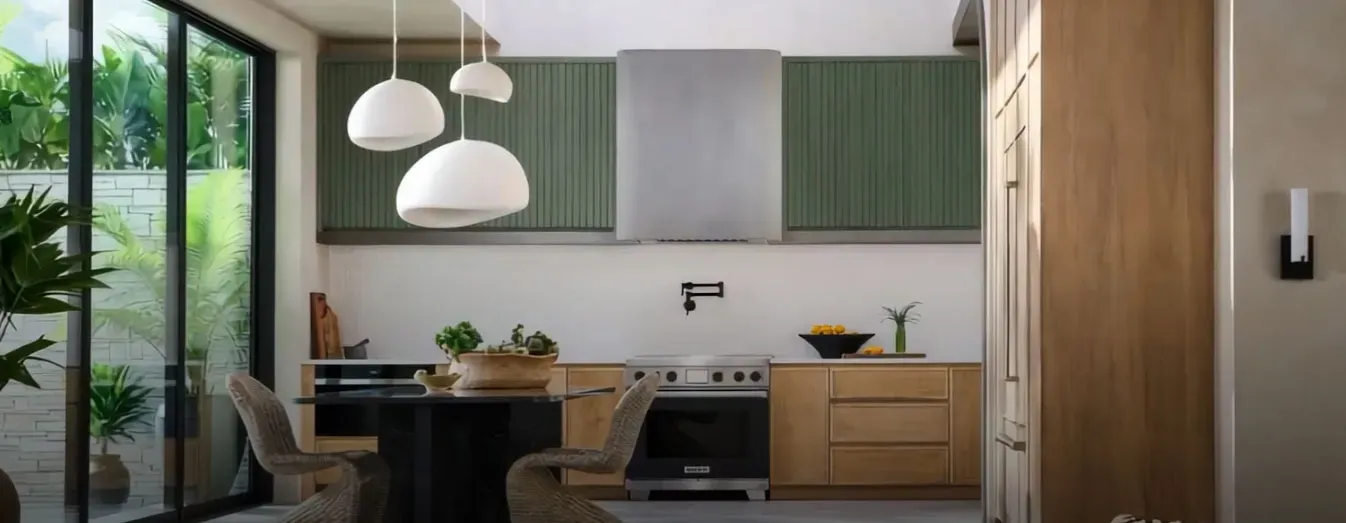
What "Warm Neutral" Actually Means in 2026 and Beyond
Warm neutrals introduce subtle variation: depth in cabinetry finishes, softness in countertops, and cohesion across rooms. They allow designers and builders to create kitchens that feel welcoming instead of showroom-perfect, while still offering high-end appeal.
It's worth being precise here, because "warm neutral" is a wide tent. For designers specifying kitchens in right now, the conversation tends to cluster around a handful of directions:
Greige & Warm BeigeThe backbone of the movement. Not gray, not beige. It reads differently in morning light versus evening candlelight, and benefits from both. Works with oak, walnut, and painted cabinetry alike. | Linen & CreamThe sophisticated alternative to stark white. Carries warmth without committing fully to color. An easy transition for clients who loved white but want the space to feel softer and more layered. |
Warm Stone & ClayMore committed neutrals that anchor a space. These read as intentional — a deliberate design statement rather than a default. Especially strong with natural quartzite countertops and unlacquered brass hardware. | Caramel & Honey TonesThe intersection of neutral and color. These read warm without being bold. Often found in custom cabinetry paints and in the natural grain of white oak or maple with a warm stain. A signature Southern look. |
The Countertop Conversation
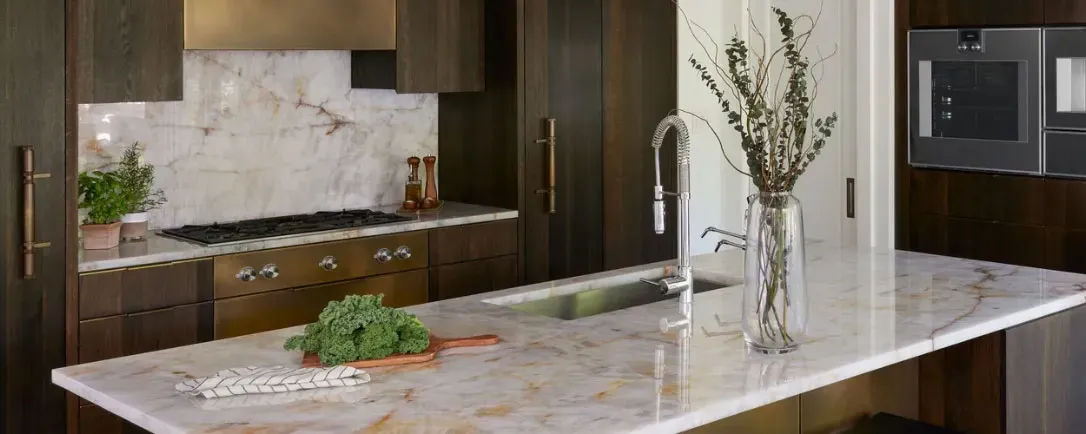
Nothing reveals the shift from cool to warm more clearly than what's happening in countertop selection. The dominance of stark white Carrara marble — and its engineered quartz imitators — is giving way to warmer stones that carry movement, character, and a sense of geological time.
Warm quartzite slabs in honey and taupe are moving fast through home design right now. So is leathered granite in brown and gold tones, and engineered quartz with visible warm veining. Dekton in warm concrete tones is appearing on island waterfall edges. Even soapstone — historically a Vermont farmhouse material — is finding a new audience in Southern kitchens, where its gray-green warmth pairs beautifully with walnut cabinetry.
For builders and designers, the countertop is often the most visible commitment to a palette. Once you move away from Calacatta white, you've declared a direction. And increasingly, that direction is warm.
Current Mood: Warm Neutrals Throughout the Home
Appliances Play a Bigger Role Than Ever
As appliances expand beyond the kitchen into laundry rooms, sculleries, walk-in pantries, and living spaces, finish selection becomes critical. This mood board above illustrates how warm neutrals unify multiple spaces:
- Kitchen: Light wood cabinetry, creamy stone countertops, and a softly-toned range create a welcoming heart of the home.
- Living Area: A built-in wine refrigerator in the living room or dining room is no longer a boutique luxury. It's a specification that appears regularly in custom builds. When it's done well, it looks like furniture: a panel-front unit integrated into a built-in bookcase or bar cabinet, with no hardware or stainless face visible. When it's done wrong, it looks like a mini-fridge with ambitions. The difference is in product selection and in working with a showroom that understands how appliances integrate into design intent.
- Laundry / Primary Suite: It is now a standard expectation in higher-end Tennessee new construction and renovation. A washer and dryer tucked into the primary closet or a dedicated suite alcove. When the rest of the suite is finished in warm linen and white oak millwork, the appliance finish matters. Matte white stacks, or machines that can be concealed behind cabinetry panels, keep the sanctuary feeling intact. CenWood works with builders specifying this kind of integrated laundry to find the right equipment for both function and finish.
- Outdoor Kitchens with Warm Edges: Tennessee's climate, genuinely four seasons, but with long, hospitable springs and falls, has driven an outdoor living boom that shows no signs of slowing. Screened porches, covered outdoor kitchens, and entertaining pavilions are increasingly standard in custom homes across our area. In these spaces, the warm-neutral conversation continues: warm stone, teak accents, and appliances finished to feel cohesive rather than industrial.
- Bathroom & Storage: Wood vanities and warm surfaces maintain cohesion beyond the kitchen. Bathroom refrigeration appliances are becoming popular. Think mini-fridges, skincare coolers, and undercounter drawers. They are used to store skincare products, medications, and beverages, often at temperatures between 40-60°F. Common options include 4-10L portable coolers for countertops, while higher-end, built-in compressor models offer precise climate control for beauty products.
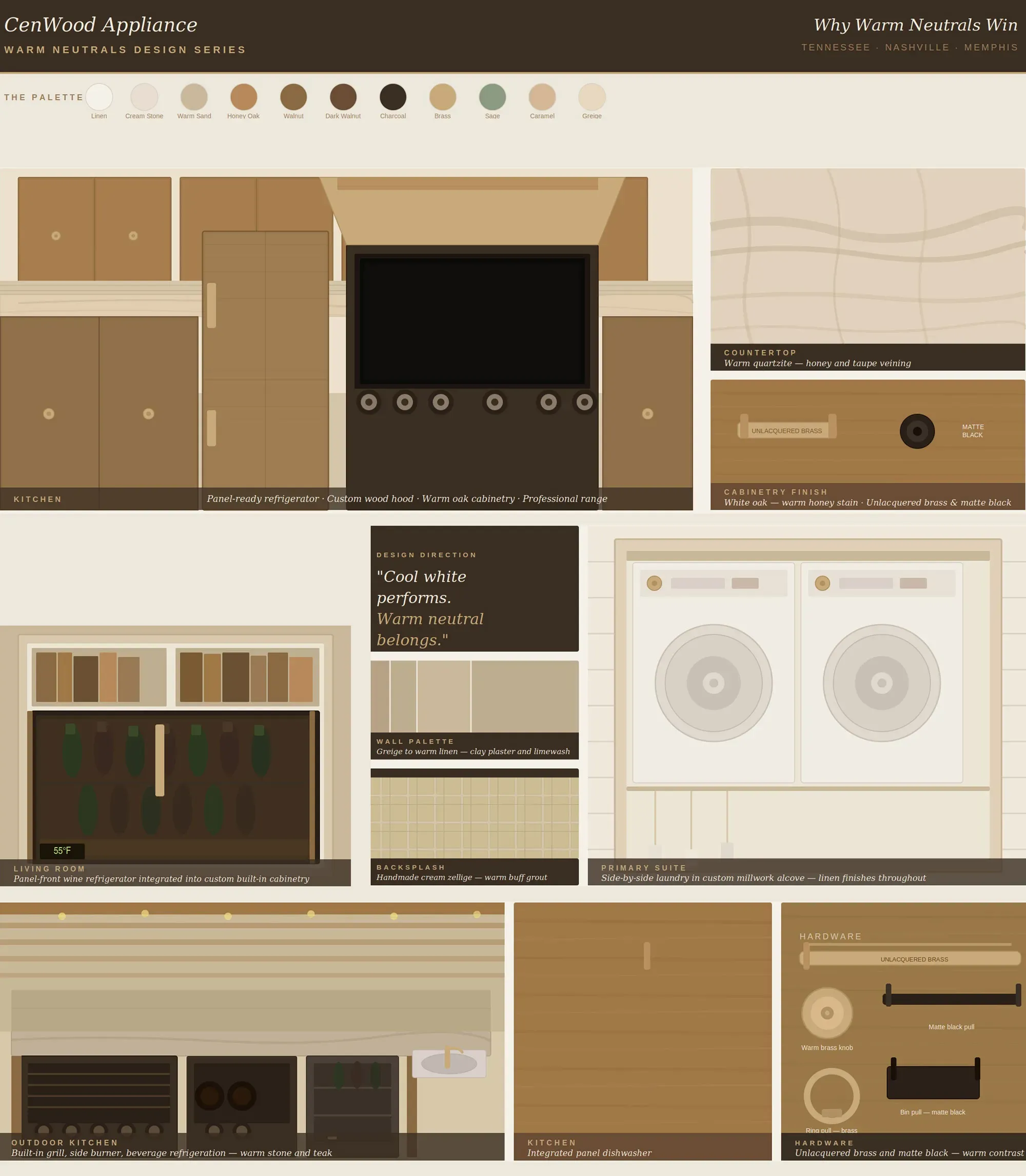
Together, these elements show how warm neutrals create continuity. This allows appliances, cabinetry, and materials to work in harmony across the entire home. Rather than standing out, appliances become part of the architecture, supporting the overall palette instead of contrasting it. Warm neutrals aren’t a departure from white—they’re an evolution. For Southern homes, they reflect a desire for comfort, authenticity, and materials that feel right for the way people gather, cook, and live every day. At Cenwood Appliance, we see firsthand how these palettes elevate both kitchens and whole-home design.
Builders and Designers Value Longevity
For builders, warm neutrals offer broader buyer appeal and longer design relevance. These palettes feel current without being trendy and transition seamlessly from traditional to contemporary homes. Builders delivering homes in Nashville's growth corridors — Nolensville, Spring Hill, Thompson's Station — and for designers specifying custom renovations in Belle Meade or Brentwood, this level of specificity in appliance selection has become a distinguishing characteristic of top-tier work.
Designers appreciate their flexibility: warm neutrals adapt easily to mixed metals, layered textures, and evolving styles—making them ideal for clients who want spaces that age gracefully.
A Note to Builders Specifying in Tennessee's Growth Markets
Franklin. Spring Hill. Murfreesboro. Mount Juliet. Nolensville. These markets are absorbing significant migration from higher-cost metros — buyers who arrive with sophisticated design expectations and the budgets to match. For builders competing in these corridors, the appliance package has become a differentiator in the same way kitchen cabinetry has. Buyers notice. They notice whether the appliances were specified thoughtfully or selected from a catalog and dropped in.
CenWood Appliance works directly with builders throughout Tennessee and Northern Mississippi to develop appliance packages that are both cost-effective at scale and design-appropriate for the market. The warm-neutral trend is not a niche preference — it is now the expressed desire of a broad and growing segment of homebuyers. Getting ahead of it in your standard spec is worth the conversation.
Related Articles